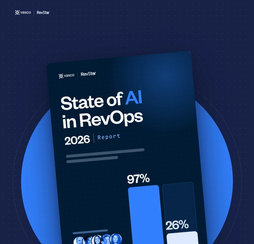
Constant checking is becoming the cost of AI revenue teams can’t trust. The State of RevOps 2026 report from RevStar and Vasco found that:
- 46% of revenue teams spend one to three hours every week validating AI output
- 26% spend four hours or more,
- 26% don’t track the time at all
Guillaume Jacquet, Vasco’s CEO and co-founder, lays out what changes once the trust is there: agents in production, governance that goes past security, and the churn agent he’d deploy first.
Trust is what gets agents into production
Until a revenue team trusts its AI, every output gets double-checked, and the hours AI saves come back as review. The report shows where that checking comes from. Only one in ten respondents blame the model’s reasoning. The rest point at data, policy and process, which are fixable problems.
Once they’re resolved, you can put agents into production and get something close to an army of analysts, while your people spend their time on revenue-generating work. In practice, that army does four kinds of jobs.
Four kinds of agents run most of your GTM needs
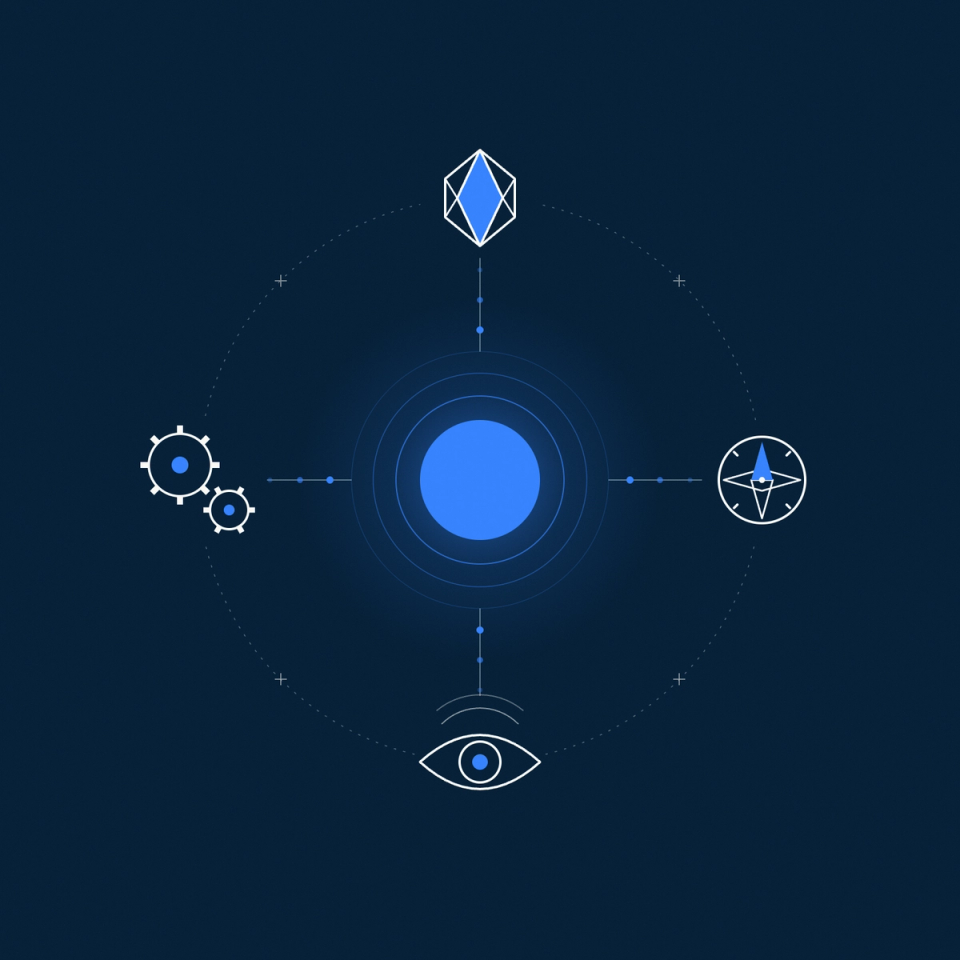
- Intelligence agents find the patterns behind your key meetings: the root cause of every revenue leak in the weekly business review, the monthly review, and the reports leadership makes decisions on.
- Discovery agents find your edge. The ICP usually lives in everybody’s head. An agent can cluster your customers and find the ones that close faster, onboard faster and retain longer. Because it reads every transcript, it can also tell you why they bought and who championed the deal.
- Monitoring agents are probably the most powerful of the four. Coaching used to take one manager for every five ICs. Agents can monitor every call, grade reps against your playbook and flag pipeline that has stalled. There’s always a gap between strategy and execution, and agents are very good at finding it.
- Automation agents take on the work around selling. The commonly cited figure is that reps spend only 30% of their time actually selling. Account research, call briefs, recaps and CRM updates can all be automated.
Currently, many teams’ agents read a different version of the business.
A Claude license for everyone isn’t AI-native
The common shortcut is to give everyone a Claude license, connect the MCPs or put an LLM on top of a warehouse. That produces more output, but nobody can tie it to ROI.
Teams hit the accuracy gap, spend more time double-checking, and watch the noise rise as anyone can build a polished narrative that serves their own interests.
It’s no surprise that only 38% of respondents in the report are confident their team’s workload is turning into better business outcomes.
Centralize your AI infrastructure, or nothing compounds
A warehouse alone doesn’t count as centralization. You need to encode your definitions and rebuild the truth: one view of each account, one customer lifecycle, and every transcript tied to the right account. That’s the GTM brain you deploy agents on.
When that’s in place, the investment shows up in the metrics you’ve always tracked, like conversion and velocity. At Owner.com, which we presented at RevStar, each rep’s target was 20x their OTE. A rep paid $100,000 brought in $2 million of ARR, about four times the benchmark.
Related reading
- Can’t I just connect Claude to all my tools?: four MCP connections, one confidently wrong summary, and a 21% miss.
- The CRO’s 2026 guide to agentic AI: how to sequence agent deployment across the revenue team.
- Time to AI: the practical path from licenses to agents in production.
Governance goes beyond security
Centralizing the data is half the work. Governance is the other half, and it’s what lets you give AI more autonomy. People hear the word and think security, which does matter: give everyone a license on a raw warehouse and salaries can surface. But governance also covers three other things:
- Locked definitions. One agreed definition each for an MQL, your ICP, pipeline generated and net retention.
- Resolved identities. If you have five versions of Acme across four tools, they need to become one.
- The customer lifecycle. Ask an agent for the pain point on an account, and without context it might answer “reset password,” because that’s what someone told support last week. You wanted the pain that started their buying process.
Without that structure, Claude reverse-engineers your MQL logic every time you ask a question, which costs about 10 times more tokens and loses accuracy along the way.
That’s why RevOps should own this context
RevOps sees sales, marketing and customer success together. A data team will build an efficient warehouse, but it doesn’t know what churn means for your business. And a point agent that only watches pipeline will celebrate a closed deal with a customer who churns two months later. That churn problem is also where I’d start.
The first agent to deploy: churn
My favorite is the churn agent. We’ve seen churn drop by 36% in some of the organizations where we’ve deployed it, and it’s one of the most popular agents on Vasco. Even so, I think it’s under-invested in the market. The report backs that up: only 18% of teams name customer health and churn as where AI delivers the most value today.
The agent watches for signals no CS team can track by hand:
- Sentiment change in tickets and transcripts: “It’s the fifth time I’ve asked you to…”
- Drops in product usage: adoption slowing down, which may mean retraining or a shift in how they value the product.
- External signals: the champion who carried your product leaves, a budget freeze comes up on a call, or an incident on your side has users venting on Reddit.
Catching these signals early means you can save a customer before they ask to cancel. It matters for growth too. AI handed everyone a spam machine, and outreach has become wallpaper. What still cuts through is a happy customer telling a friend. A support team doesn’t dream of reading 500 pages of tickets, and this agent gives them time to make customers heroes instead.
Managers get to manage again
Monitoring changes the shape of the team as well. With agents reviewing calls, a manager no longer needs to listen to 50 hours of recordings a week. The ratio can move from one manager for every five ICs to one for every ten, and that manager gets more face time with the team. Fewer layers mean less bureaucracy, and ICs feel closer to the mission.